Knitted Terry vs Microfiber hair towels: What's the difference
If you’re choosing a hair towel, you’ll mostly find two kinds: microfiber and terry. They may look similar, but they're built differently and behave differently on wet hair. Understanding how each material works makes it easier to choose the right one for you.
How microfiber works
Microfiber is made from very fine synthetic fibers, usually polyester and polyamide that's split into strands many times thinner than a human hair. Those tiny strands create a huge amount of surface area packed into a thin, light cloth.
That large surface area is what moves water through the fabric. Microfiber works by pulling water into the tiny spaces between the fibers and holding it near the surface of the cloth. Because microfiber is thin and lightweight, it dries quickly after use.
Synthetic fibers don't absorb water into the fiber itself. Instead, they hold water between the strands and move it through the fabric. Cotton fibers absorb water into the fiber, which is one of the reasons cotton terry has such a familiar feel.
How terry works
Terry is the looped fabric most people picture when they think “towel.” Those loops are the whole point: each loop is extra surface area and a small reservoir that pulls water off your hair and into the body of the cloth. Cotton terry uses cotton fiber, which absorbs water into the fiber rather than only holding it at the surface.
But not all terry is built the same way, and this is where most of the difference between
towels actually lives.
Cut terry is woven, and the loops are sliced open during finishing. Open loops feel plush at first, but they can pill and fray with use, and the fabric tends to flatten and roughen over time.
Knitted terry is knitted rather than woven, and the loops stay closed. Closed loops hold
their shape wash after wash, so the fabric keeps its structure and softness for longer.
Weight, and why it matters for hair
A hair towel sits on your head, so weight matters. As a towel absorbs water, it gets heavier. If you've ever had to keep readjusting your towel because it kept slipping, weight is usually part of the reason.
Fabric weight is measured in grams per square meter (g/m²). A lighter, well-built fabric can absorb water without feeling heavy on your head. The goal isn't the lightest towel, it's finding the right balance between absorbency, comfort, and a secure fit.
This is also why fit matters. A towel that wraps and stays put lets the fabric do its job hands-free while you get dressed or move around. Some knitted terry includes a small amount of elastane, which gives the fabric gentle stretch so it conforms to your head instead of feeling tight.
So which should you choose?
There's no universal "best" hair towel. It depends on what you value. Microfiber is lightweight, dries quickly after use, and is often more affordable. Knitted terry is built around absorbency, comfort, and long-term durability.
What COTI is made of
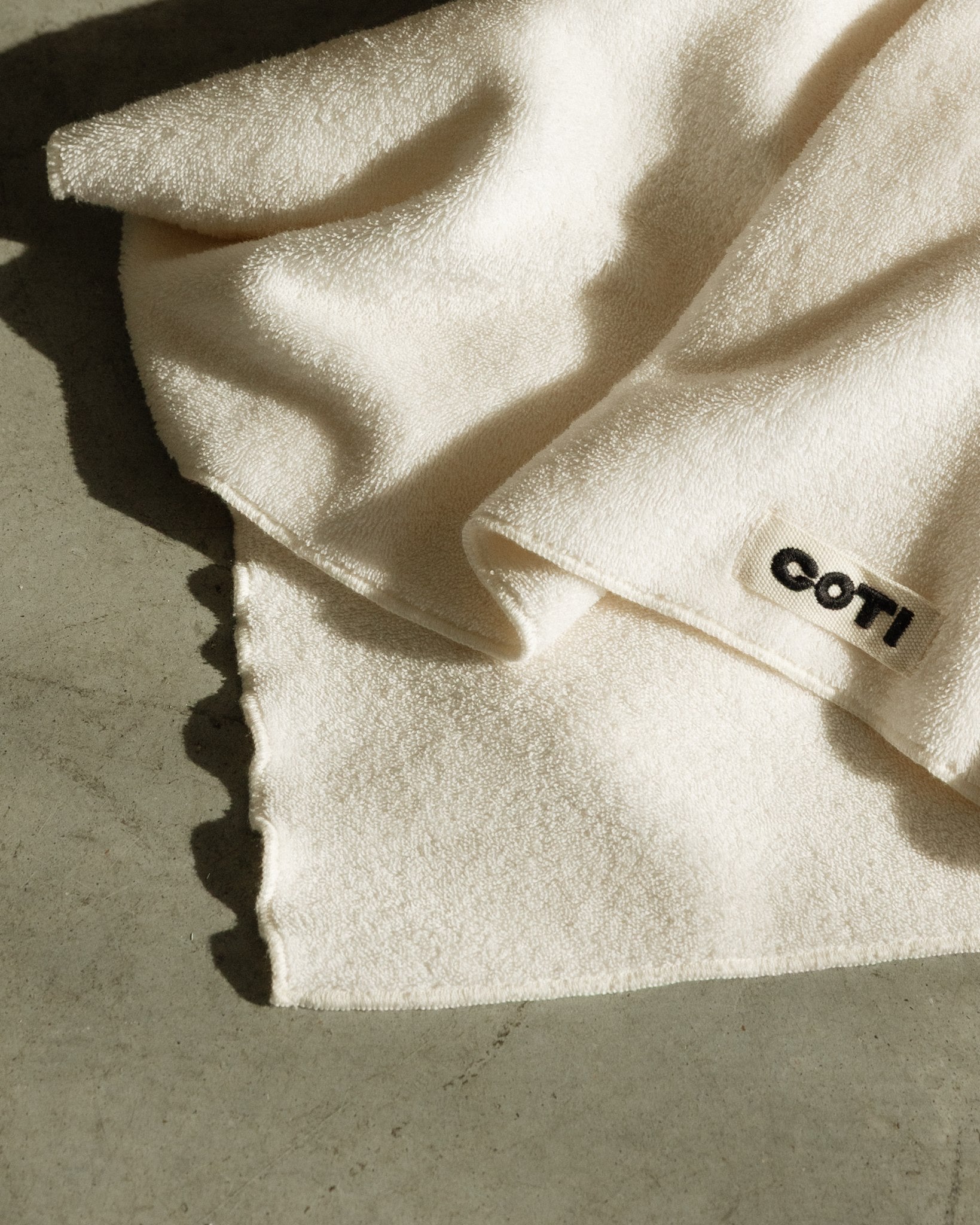
COTI's Hair Towel is made from knitted terry in Portugal using 80% cotton, 17% polyester, and 3% elastane, at 385 g/m². The closed knitted loops help the fabric hold its structure over time, the cotton does the absorbing, and the elastane provides gentle stretch for a secure fit that's light enough to wrap and stay put.
The best hair towel isn't defined by the label on the tag. It's defined by how it's made.
Frequently Asked Questions:
What does knitted terry mean?
Knitted terry is terry fabric made on a knitting machine rather than a loom. The loops are formed closed instead of being woven and cut, which helps the fabric hold its structure and softness through repeated washing.
Why are some hair towels heavy?
A hair towel's weight depends on its construction, fiber content, and fabric weight (measured in grams per square meter). As it absorbs water, every towel becomes heavier, but a well-built fabric can absorb water without feeling bulky or constantly slipping.
Does fabric weight matter for a hair towel?
Yes, more than most people realize. Because a hair towel sits on your head, weight affects both comfort and whether it stays securely in place. It's one of the biggest differences between two towels that may look almost identical.
Is all terry the same?
No. Terry can be woven or knitted, made from different fibers, and produced at different fabric weights. Two towels both labeled 'terry' can feel and perform very differently depending on how they're made.