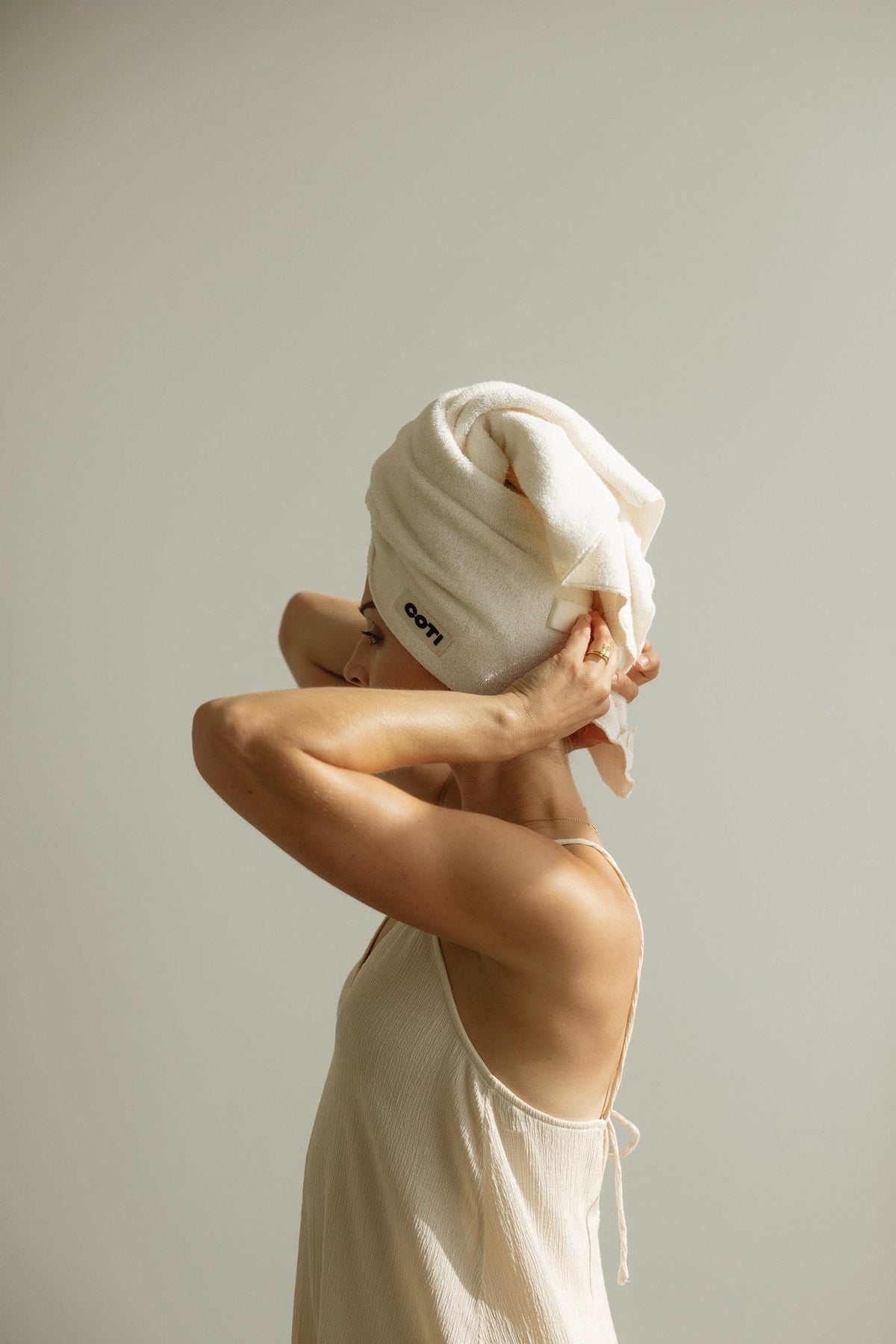
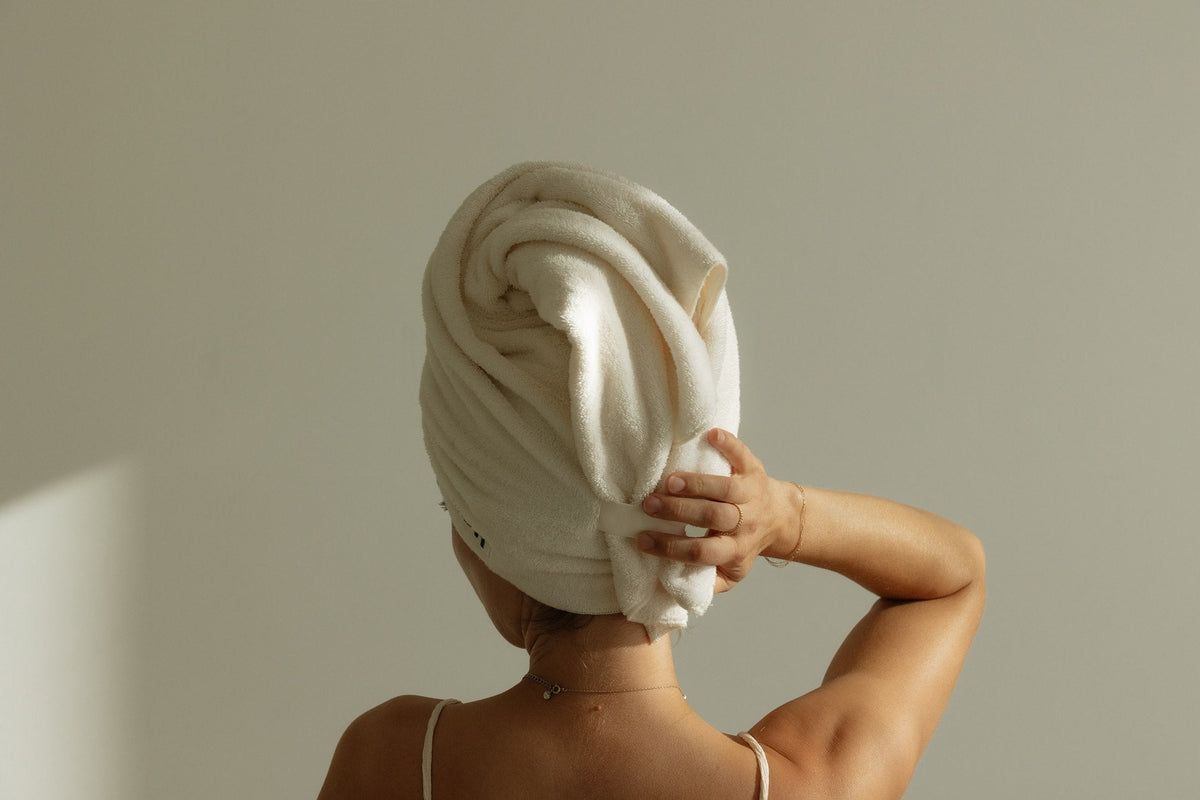
Do hair towels actually work?
Short answer: a good one does.
A hair towel isn’t useful simply because it’s shaped for your head. Fabric, weight, absorbency, and the way it stays in place determine whether it actually does its job.
COTI’s Hair Towel is made in Portugal from knitted stretch terry, primarily cotton, at an OEKO-TEX Standard 100 certified mill. It was designed to absorb water while remaining light and wearable. So what should a hair towel actually do, and how can you tell whether one is worth buying?
What a hair towel is actually for
A hair towel has one primary job: remove as much water as it can before you reach for the dryer.
Cotton absorbs water into the fiber, allowing the towel to take on some of the work before you ever reach for heat. The less water left in your hair, the less drying is left to do.
We wrote a full guide on that here: How to dry your hair faster.
The second job is your hands.
A hair towel that stays in place lets your hair dry while you get ready or do whatever comes next. That is the real difference between a towel you wear and a towel you have to hold.
Why a bath towel isn’t quite the same
A bath towel isn’t bad. It’s simply built for a different job.
It is larger, heavier, and designed to dry your body. Once wet, that extra size means extra weight on your head, and a standard bath towel isn’t designed specifically to stay secure while you move.
A hair towel is smaller and lighter by design. The right construction should absorb water without feeling cumbersome and stay in place without requiring you to continually retwist it.
If yours keeps sliding off, we covered why here: Why your hair towel keeps slipping off.
The fabric decides whether it works
Hair towels come in everything from microfiber to waffle weave cotton to terry. The material matters, but so does the way the fabric is constructed.
COTI’s Hair Towel uses knitted stretch terry made primarily from cotton. The terry loops provide the absorbent surface, while polyester and elastane are incorporated into the knitted base to give the fabric structure and stretch.
That construction gives the towel flexibility while allowing the terry surface to absorb water. The result feels like a real towel, but remains light enough to wear and flexible enough to conform to your head.
A tuck strap and discreet grip dots help secure the end so you can put it on and move on.
If you want the deeper dive into construction, it’s here: Knitted terry vs. microfiber hair towels.
What customers notice first
One thing we hear from customers is how much water the towel takes out before they reach for the dryer.
“My COTI hair towel worked better than I remembered. It was soft and absorbent which made drying time less.”
Nicole Y.
“I was impressed with the soft and moisture absorbing material. I loved the sleek look of the towel and how it stayed put despite my fine hair (the type of hair towels love to fall from).”
Megan W.
“My daughter loves her hair towel, it really takes a lot of water out of her hair.”
COTI customer
So, are hair towels worth it?
Judge any hair towel on three things:
What is the fabric made from? Is it comfortable to wear once it’s wet? Does it stay in place while you move?
A good hair towel earns its place by doing its job quietly in the time between washing your hair and whatever comes next.
If you’re weighing the price of ours, we wrote about where it’s made and why: Why the Hair Towel is made in Portugal.
And you can find The Hair Towel here.
Frequently asked questions
What is a hair towel?
A hair towel is a smaller, lighter towel designed to wrap wet hair and stay in place while you do other things. Its job is to absorb water from your hair before you reach for a dryer, while leaving your hands free.
What are hair towels made of?
It varies across the category. Microfiber, waffle weave cotton, and terry are all common.
COTI’s Hair Towel is knitted stretch terry made primarily from cotton. The terry loops provide the absorbent surface, while a small percentage of polyester and elastane are incorporated into the knitted base to provide structure and stretch.
How is a hair towel different from a bath towel?
Mostly size, weight, and construction. A bath towel is designed for drying your body. A hair towel is designed specifically to be worn on your head, so it is lighter, easier to secure, and more comfortable to leave on while you move.
How long should you leave a hair towel in your hair?
There’s no single rule. How long you leave it on depends on how wet your hair is, how much hair you have, and what you’re doing next.
You can simply wrap your hair after washing and leave the towel on while you do whatever comes next. The goal isn’t a specific number of minutes. It’s to give the towel time to absorb excess water before you move on to drying or styling.
Do hair towels reduce drying time?
A hair towel can remove excess water before blow drying, which means there is less water left for your dryer to remove.
Exactly how much time that saves will vary depending on your hair, how wet it is, and how long you wear the towel. Everyone’s hair is different so there isn't a "magic" number of minutes.
How are cotton and microfiber hair towels different?
Microfiber is typically made from synthetic fibers and is known for being lightweight and absorbent. Cotton absorbs water into the fiber and has the familiar feel of traditional toweling.
COTI chose a cotton knitted terry because we wanted the absorbency and feel of a real towel, combined with enough stretch to make it comfortable and secure on the head.
How long does a hair towel last?
That depends on the fabric, construction, how often it’s used, and how it’s cared for.
COTI’s knitted terry construction was chosen in part for durability. The knitted loops are designed to maintain their appearance and consistency through repeated washing. Following the care instructions, including avoiding fabric softener and washing on a gentle cycle, will help preserve the towel over time.
How should you wash a hair towel?
COTI’s Hair Towel can be machine washed cold on a gentle cycle and tumble dried low. Avoid fabric softeners and bleach, which can interfere with the towel’s performance and appearance over time.