Article: Why we made a hair towel out of cotton
Why we made a hair towel out of cotton
The fabric came first. Before COTI was a hair towel, it was a material I couldn’t stop thinking about: a knitted cotton terry with stretch, made in Portugal. The product followed the fabric, not the other way around.
Most hair towels I’d encountered were made from microfiber. I wanted something different: a hair towel that worked like one, but actually felt like a towel. So we started with cotton.
I never liked microfiber
This part is personal. I never liked the way microfiber feels. To me, it’s the fabric you dry a car with. Useful, effective, and not something I wanted against my skin. It did its job. I just didn't like the way it felt.
Microfiber is typically made from synthetic fibers like polyester and polyamide. It works well for drying, but it wasn't a material I wanted to build COTI around.
I’ve always liked cotton. It’s the fiber we already know from our sheets, our shirts and our bath towels. So when I found a cotton terry with stretch, a hair towel started to make sense.
If you want to see how the two materials compare, we break it down here: Knitted terry vs microfiber hair towels.
What our hair towel is actually made of
The Hair Towel is 80% cotton, 17% polyester and 3% elastane.
So no, it isn't 100% cotton. The fabric is a knitted cotton terry with stretch, made in Portugal. Cotton makes up most of the fabric and gives it the absorbency you expect from a towel.
The polyester and elastane are there for a reason. They help give the fabric its stretch and structure, so the towel can comfortably wrap around your head and keep its shape.
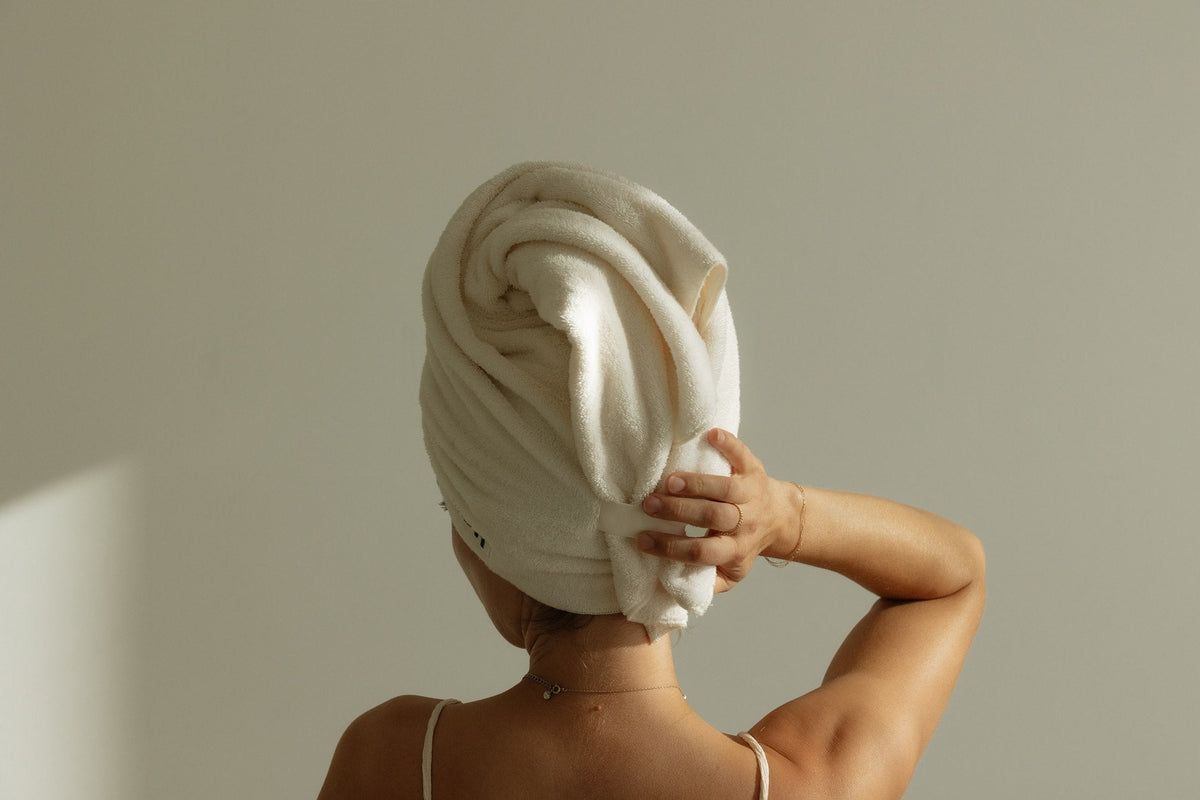
That combination is what made this fabric different to me. It still feels like a cotton towel, but it has the flexibility we needed to actually wear it on your head.
Built like a textile, not an accessory
We didn’t start with a hair towel shape and then look for a fabric to make it from. We started with the fabric.
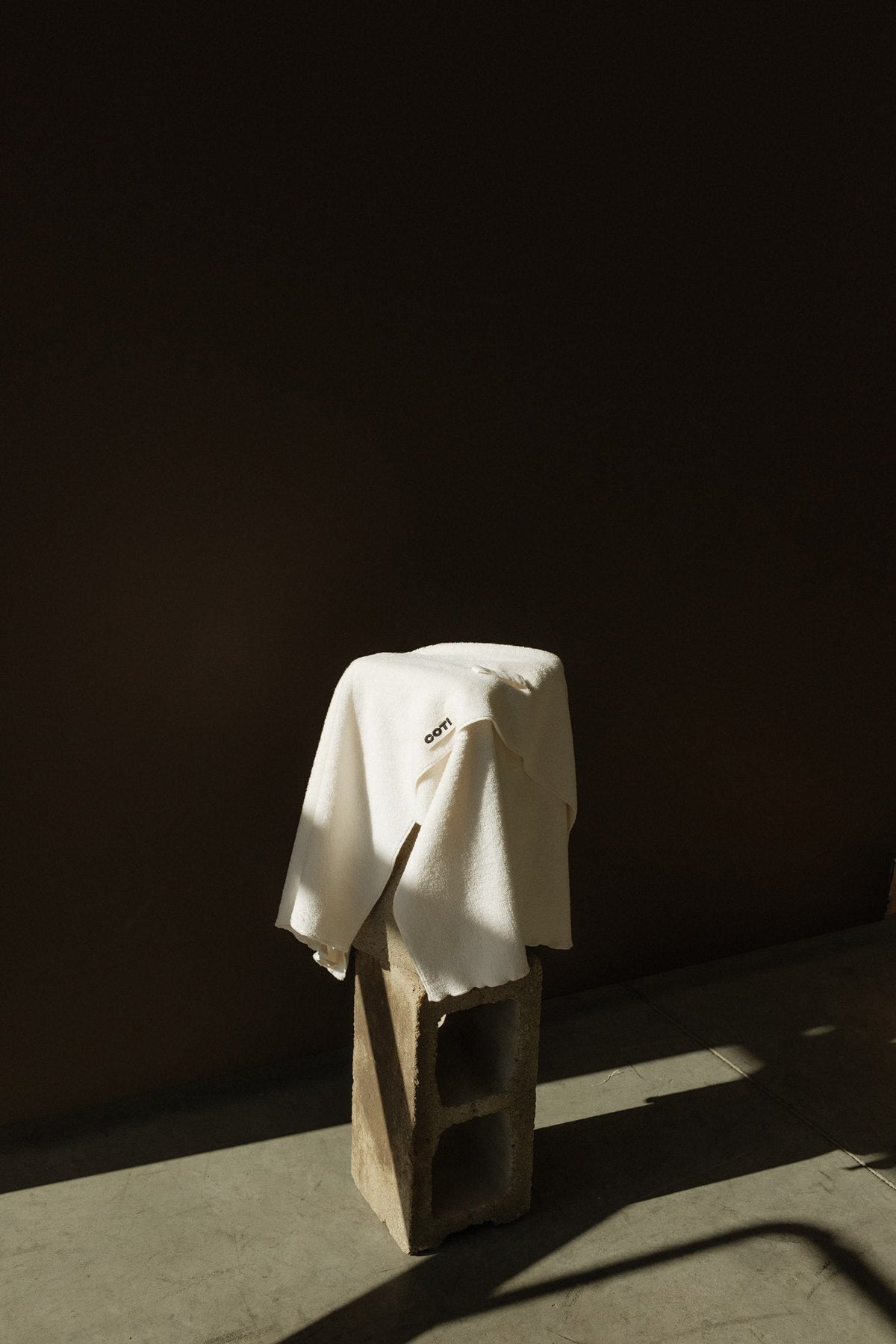
Our cotton terry is knitted instead of woven like a traditional bath towel. That difference gives it stretch and flexibility while still looking and feeling like a real towel. It's also absorbent, breathable, and comfortable to wear.
The fabric is made in Portugal at an OEKO-TEX Standard 100 certified mill with a long history of making towels.
Portugal was also an intentional part of the process. We share more about where The Hair Towel is made and why here: Why the hair towel is made in Portugal.
The point
A hair towel touches your wet hair every time you use it. We think the material should be chosen, not defaulted.
For COTI, that meant starting with cotton and finding a fabric that had the stretch and flexibility a hair towel needs. We found both in this knitted terry.
If you’re still wondering whether you need a separate towel for your hair, we break that down here: Do hair towels actually work.
Frequently asked questions
Is The COTI Hair Towel 100% cotton?
No. The Hair Towel is 80% cotton, 17% polyester and 3% elastane. The cotton gives it the familiar feel of a towel, while the polyester and elastane help give the knitted fabric its stretch, flexibility and shape.
Why does a hair towel need stretch?
A hair towel needs enough stretch to fit comfortably around your head and stay in place while you move. The elastane in our knitted cotton terry gives the fabric that stretch while helping it return to its original shape.
How does cotton absorb water?
Cotton naturally absorbs moisture, which is one reason it has been used for bath towels for generations. This knitted cotton terry used for The Hair Towel is highly absorbent and designed to pull moisture from wet hair.
What is elastane?
Elastane, sometimes called spandex, is a stretchy fiber added to fabrics to help them move and return to their shape. The Hair Towel contains 3% elastane, which gives the fabric the stretch it needs to fit comfortably around your head.
How is knitted terry different from woven terry?
Most traditional bath towels are made from woven terry. The COTI Hair Towel is made from knitted terry, which gives the fabric more natural stretch and flexibility. Because the loops are part of the knitted construction, they also hold their shape and appearance over time.